Ludo Strategy for Beginners: 8 Tips to Win More Games
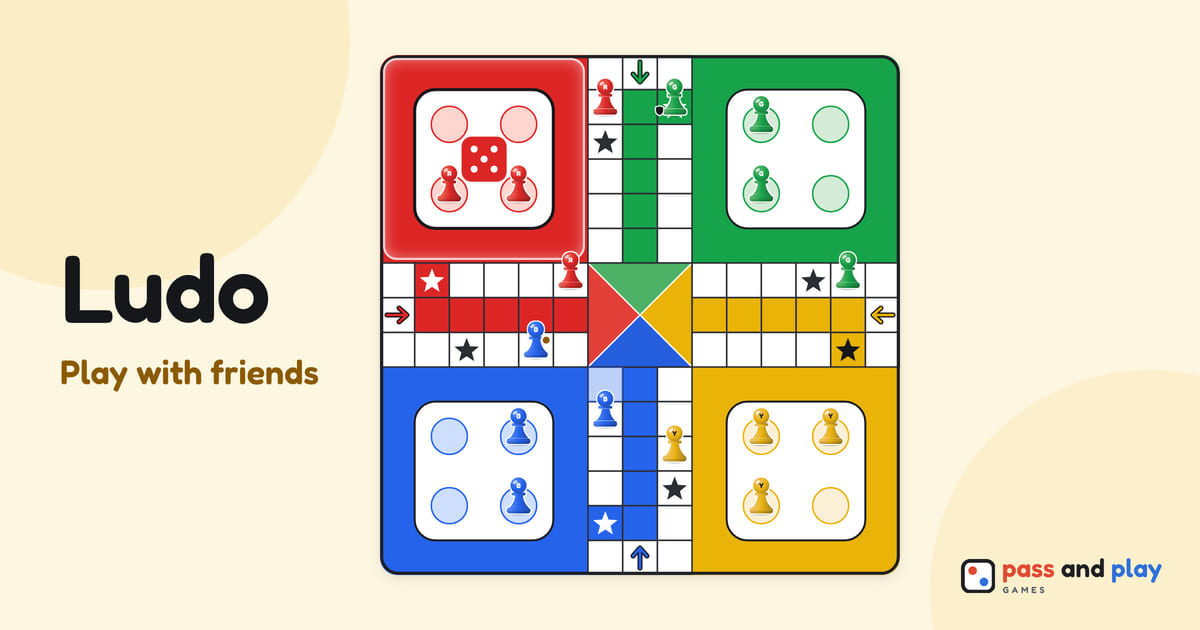
Ludo looks like a game of pure luck. The die decides how far you move, so what is there to plan? Quite a lot, as it turns out. Every roll asks you to choose which token to move, and over a full game you make dozens of those choices. Good choices keep your tokens safe and slow your rivals down. Poor ones send your best token back to the yard just before it reaches home.
Here are eight habits that will make you a noticeably stronger Ludo player, whether you play with family around one tablet or against the computer.
A 60-second rules recap
Each player has four tokens in a corner yard. You need a 6 to bring a token out onto your start square, then it races clockwise around the 52-square track and up your own home column. Land exactly on a lone rival token and it goes back to its yard. The four start squares and the four star squares are safe, and two of your own tokens on one square form a pair that cannot be captured. A 6, a capture or bringing a token home earns a bonus roll, and you need an exact roll to finish. If you want every rule in detail, the full Ludo rules guide covers them, including the house rules families argue about.
1. Get more than one token into play
It is tempting to use every 6 to push your first token further ahead. Resist it. With only one token on the board, every roll has to move that token, even when the number lands it right in front of an opponent. With two or three tokens out, you always have a choice, and choice is what keeps you safe.
2. Learn the danger zone
A token that sits one to six squares in front of a rival token can be captured with a single roll. That stretch of track is the danger zone. Before you move, look at where each of your tokens will land and count back to the nearest rival behind it. If the gap is six or less, ask whether a different token could use the roll instead.
Remember that a 6 earns another roll, so a rival seven to twelve squares behind can still reach you with a 6 followed by the right number. That is much less likely than a direct hit, but it is not zero.
3. Use safe squares as stepping stones
Start squares and stars are the only places on the track where a lone token can never be captured. When a rival is close behind you, moving onto the next safe square is often better than racing ahead and hoping. The stars sit eight squares past each start square, so you can plan your hops between them.
4. Pair up when you are being chased
Two of your tokens on the same square form a pair, and a pair cannot be captured, even on an ordinary square. If one of your tokens is under threat and another of yours sits the right distance away, moving them together protects both. Check your house rules here: in some families a pair also blocks other tokens from passing, which makes pairs even stronger.
5. Capture the tokens that have travelled furthest
Not all captures are equal. Sending back a token that has just left its yard costs your opponent a few turns at most. Sending back one that is three-quarters of the way round costs them nearly a whole lap and another 6 to bring it out again. When you have a choice of captures, take the one that hurts most. A capture gives you a bonus roll as well.
6. Think twice before bringing out a new token
When you roll a 6 you can bring a new token out or move one already on the board. Usually a new token is the better choice, because more tokens means more options. But if one of your tokens is sitting in the danger zone, using the 6 to move it to safety can be worth more. Because a 6 also gives you another roll, you can sometimes do both.
7. Get into the home column, then plan your exact rolls
Once a token turns into your home column, no one can touch it. Getting tokens there quickly removes them from danger. The catch is the exact roll needed to finish. If two of your tokens both need a 3 to get home, many rolls will be useless to you. Try to leave tokens at different distances from home so more numbers on the die are helpful.
8. Adjust for the number of players
In a two-player game the colours sit in opposite corners, so there is more open track and fewer threats behind you. You can afford to play aggressively, chase captures and race. With four players, there is almost always a rival token somewhere behind you, so safe squares and pairs matter far more and patience pays off.
Practise and play
The quickest way to improve is to play a lot of short games. You can play Ludo free with 2 to 4 players on one phone, tablet or computer, and fill any empty seats with computer players when you want to practise these tips alone. If Ludo is a hit with your group, have a look at our list of 7 free board games to play with friends on one phone for your next game night.


Comments
Post a Comment